
Guam

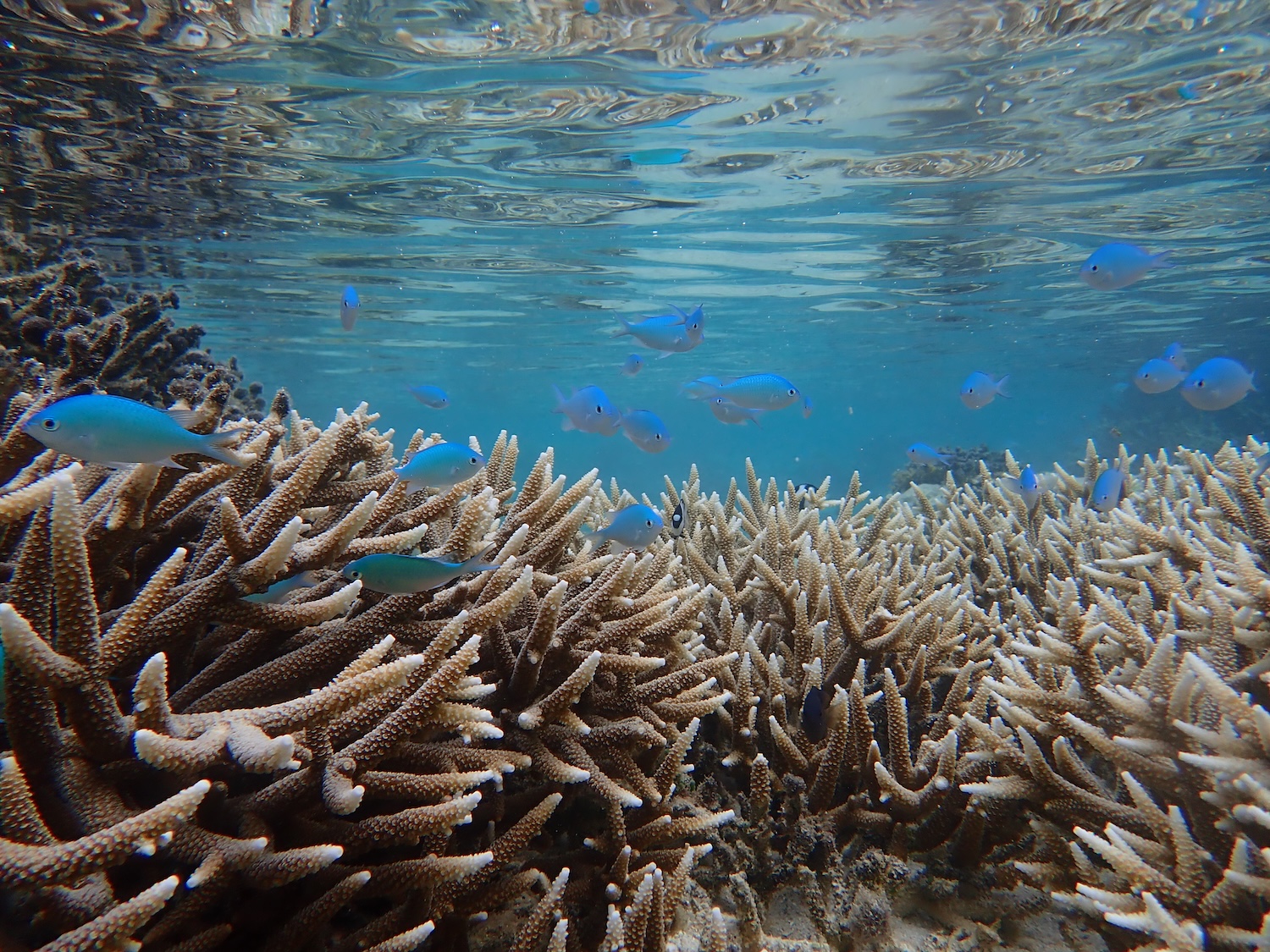
Guam is an unincorporated U.S. territory in the Western Pacific. It consists of a single island with a landmass of 212 mi2 (549 km2). [1]
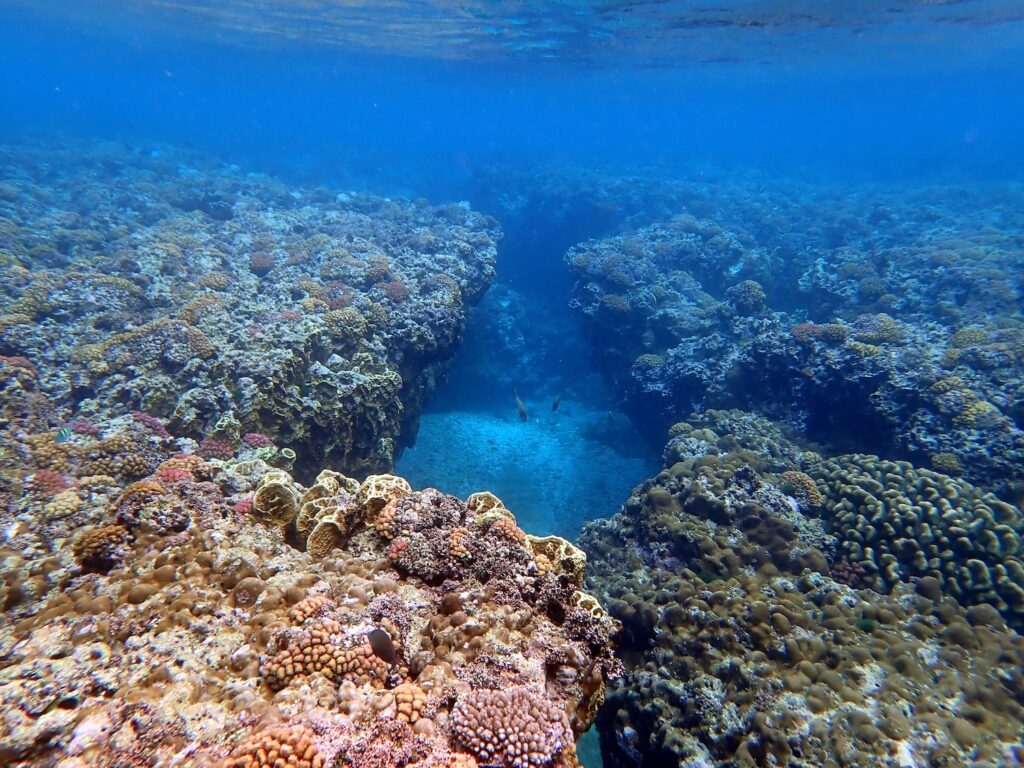
The waters of Guam host 42 mi2 (109 km2) of shallow coral reefs and 43 mi2 (111 km2) of deeper coral reefs at least 3 nautical miles offshore. [2] The island has reef types including: fringing, barrier, and patch reefs. [3]
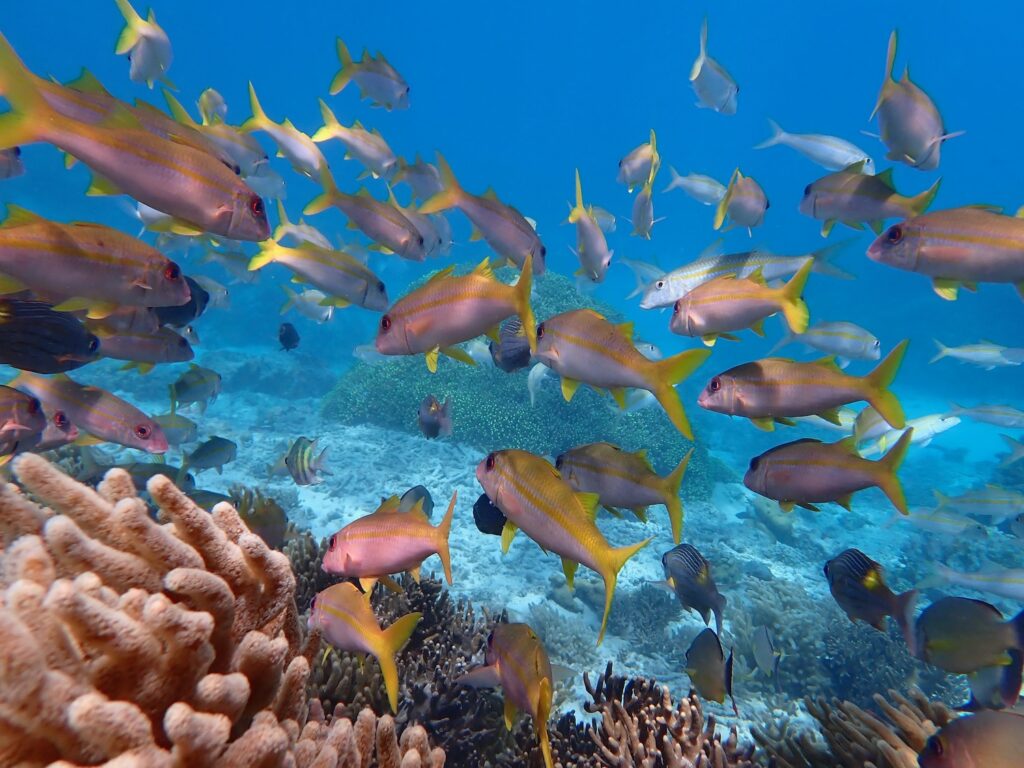
Guam’s reefs are home to
400 reef-building coral species
1,000 nearshore fish species
[4]
Reef Threats


Coral Bleaching
Land-Based Sources of Pollution
Fishing Pressure
Learn more
- Due to unseasonably warm ocean temperatures, Guam’s reefs experienced severe coral bleaching in 2013, 2014, 2016, and 2017. Approximately one-third of all corals in shallow reefs were lost, rendering this bleaching event the worst in Guam’s recorded history. Since then, slightly more than half of Guam’s reefs have started recovering, but they still have not recovered to their pre-bleaching state. [2]
- High ocean temperatures led to some bleaching again in the summer of 2024, though the bleaching was far less widespread than expected, likely due to the timely arrival of summer storms that cooled the water down.
Learn more
- Harmful soil erosion and sediment runoff are an issue in Guam due to poor erosion control during construction, deforestation from frequent wildfires, and deforestation from invasive pigs and deer. Growing populations and increased development have also caused land-based threats such as polluted stormwater runoff and increased levels of marine debris.
- High levels of nutrient inflow from land-based sources have been linked to outbreaks of local nuisance species, such as the crown-of-thorns sea star (COTS). These sea stars, while native to the area, are coral predators that can decimate reefs when present in large populations. For example, in 1968-69, Guam had a major COTS outbreak that reduced coral cover to <1% in 3 surveyed zones. [5]
Learn more
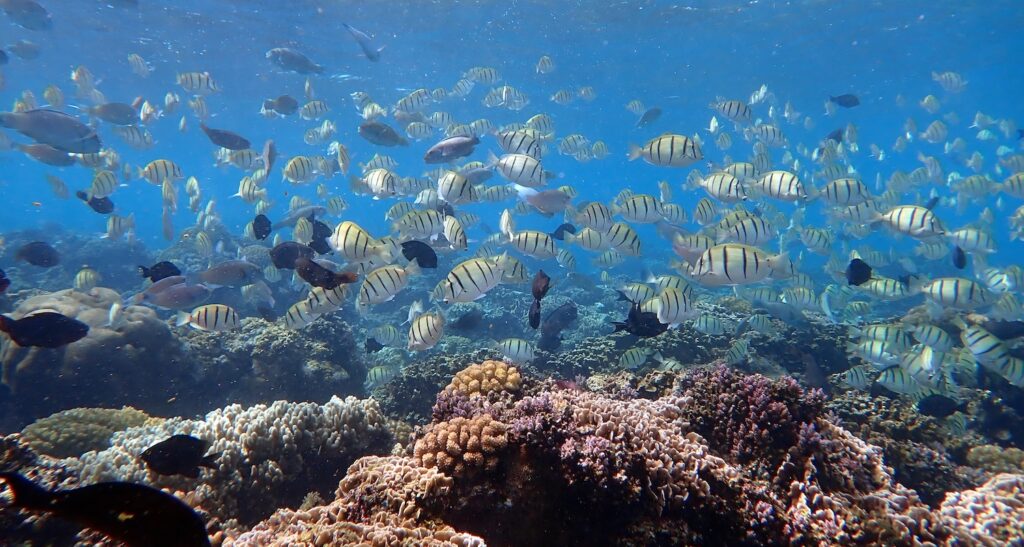
- Fishing has been a very important part of Guam’s culture for thousands of years and continues to be today; 30% of residents fish, and 94% of these fishers do so to feed themselves or their families. [6] While many fishers employ sustainable fishing practices, not all do. This increased fishing pressure disrupts the balance of coral reef ecosystems by reducing the number of herbivorous fish, which are essential for reducing algae overgrowth.
- Herbivorous fish such as the steephead parrotfish (Chlorurus microrhinos, or palakse’ in CHamoru), convict tang (Acanthurus triostegus, or kichu), and forktail rabbitfish (Siganus argenteus, or guili) are highly sought-after by fishers.
Reef Protections
- Guam is home to 5 locally-managed marine preserves covering over 10% of the island’s coastline. [3] These local marine preserves were established in 1997 and include 1 no-take preserve and 4 limited-take preserves. Guam also has 4 federally managed marine preserves.
- In addition to marine preserves, Guam’s reef ecosystems are also protected by reef-related legislation, including:
- Public Law (PL) 16-039.6 of 1981 outlawing the take of corals growing in 60 ft of water or less, island-wide
- PL 35-78 of 2020 outlawing SCUBA spearfishing
- Resolution No.207-37 of 2024 designating coral reefs as essential infrastructure protecting the coasts of Guam.
- PL 38-5 of 2025 prohibiting the import of skincare products that pose a danger to Guam’s coral reefs and marine life.
Bright Spots and On-Going Initiatives
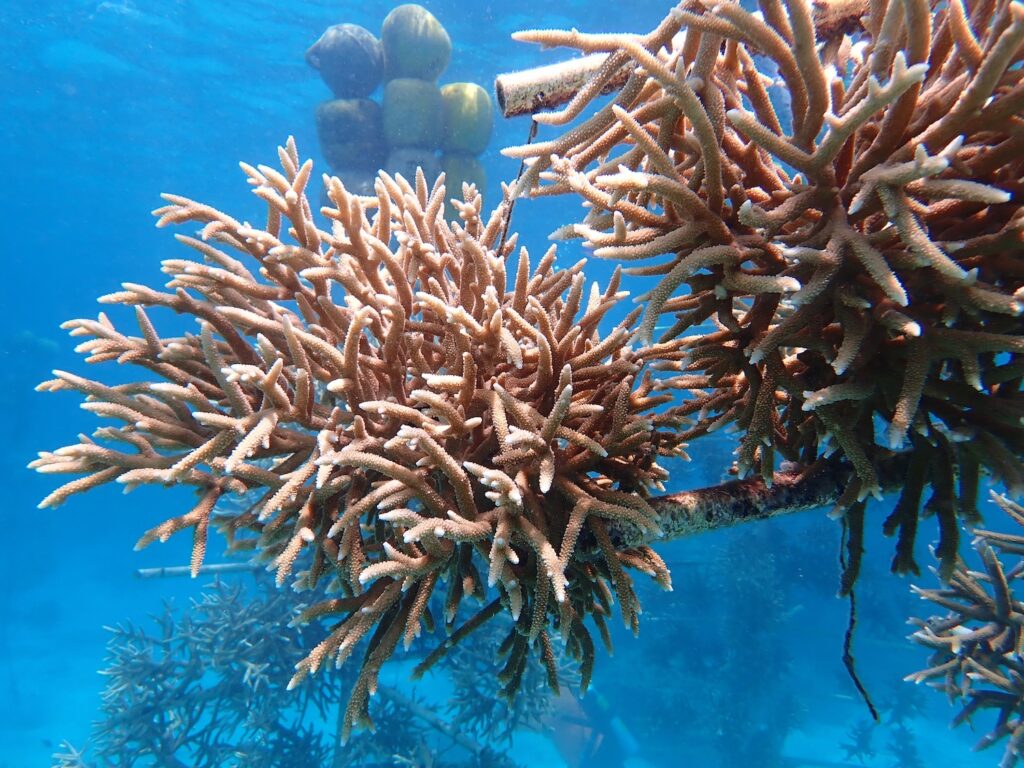
Guam currently has 4 active coral nurseries spread across the island. The University of Guam Marine Lab established the island’s first coral nursery in Piti Bomb Holes in 2014, and later established its second nursery in the Cocos Island Lagoon in 2019. All corals in these nurseries are staghorn corals of the genus Acropora. Thus far, these two nurseries combined have resulted in 4257 coral colonies outplanted and 3.2 acres of reef restored. [3]

In 2024, the Guam Coral Reef Initiative established its first nursery in the Piti Bomb Holes Marine Preserve, and then established its second nursery in 2025 in Dogleg Reef, Apra Harbor. These nurseries house a range of different growth forms and species, including branching coral of the genus Pocillopora, massive coral of the genus Diploastrea, and plating coral of the genus Pavona.
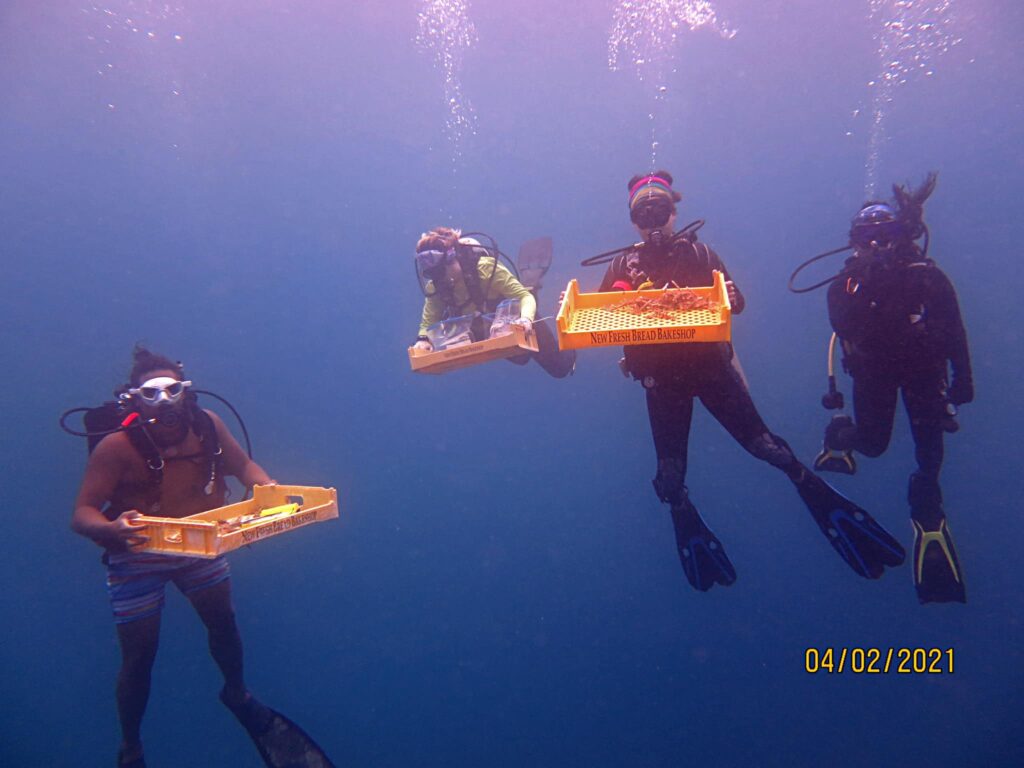
The Guam Coral Reef Initiative, in collaboration with partners from the University of Guam Marine Lab, The Nature Conservancy, the National Parks System, NOAA, and others, formed the Guam Reef Restoration and Intervention Partnership (GRRIP). This group shares knowledge and collectively monitors and responds to reef threats such as coral bleaching, vessel groundings, and COTS outbreaks.

Guam’s reefs are managed by the Guam Coral Reef Initiative (GCRI), which is part of the Government of Guam Department of Agriculture Division of Aquatic and Wildlife Resources (DOAG-DAWR).
Check out the Guam Coral Reef Initiative website to learn more about their work!
Connect with GCRI on social media @guamcoralreefs
Other resources to explore
- Mariana Islands Reef Information – Guam Coral Reef Initiative
Sources cited
- [1] 9th Planners Symposium Marine Resources
- [2] Guam’s Coral Reefs
- [3] Guam Coral Reef Initiative’s Marianas Reefs Information
- [4] The state of coral reef ecosystems of the United States and Pacific Freely Associated States : 2005
- [5] Guam Crown-of-Thorns Outbreak Response Plan December 2017
- [6] National Coral Reef Monitoring Program: Socioeconomic surveys of human use, knowledge, attitudes, and perceptions in Guam from 2016-02-06 to 2016-07-27